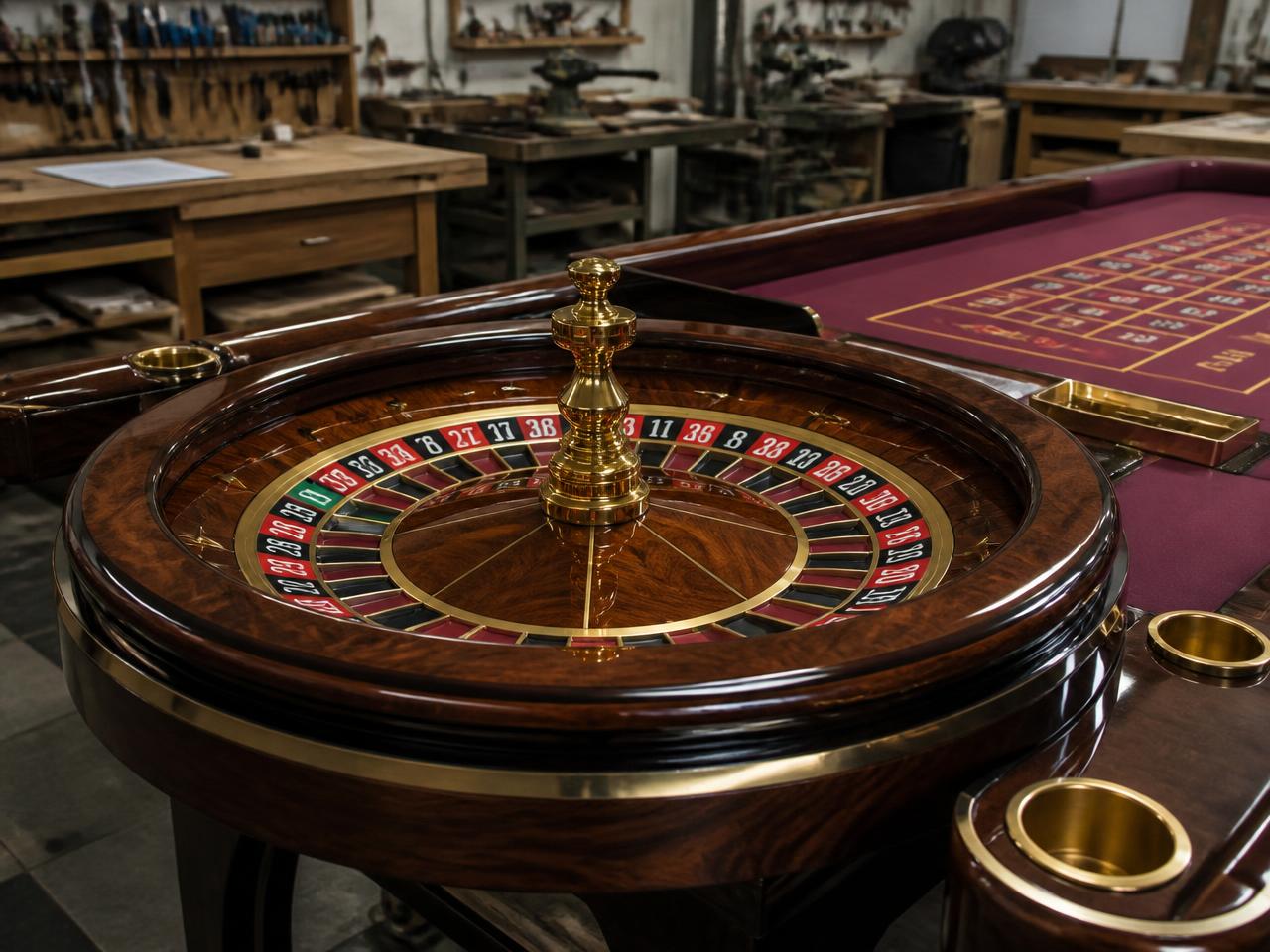
The workshop smells of shellac and machine oil. Along one wall, turned bowls sit inverted on padded cradles while their finishes cure; along the other, layouts are being printed on plum baize under a low raking light that shows every misalignment.
Wheel manufacture is a study in tolerance stacking. Bowl, turret, ball track and fret assembly each carry a small permitted error, and the craft consists of arranging those errors so that they cancel rather than compound.
A wheel is checked for level in four positions, then left overnight, then checked again. Timber has opinions about humidity.
Measured, then measured again
Every wheel is levelled in four positions on a granite bench, rested overnight and re-checked before it leaves. Timber moves with humidity, and a wheel that reads true in a dry workshop can read differently in a coastal venue.
Fret profiles have converged on low-profile geometries that reduce predictable deflection. The change was driven less by fashion than by testing houses, which measure scatter patterns as part of certification.
Where automation arrives
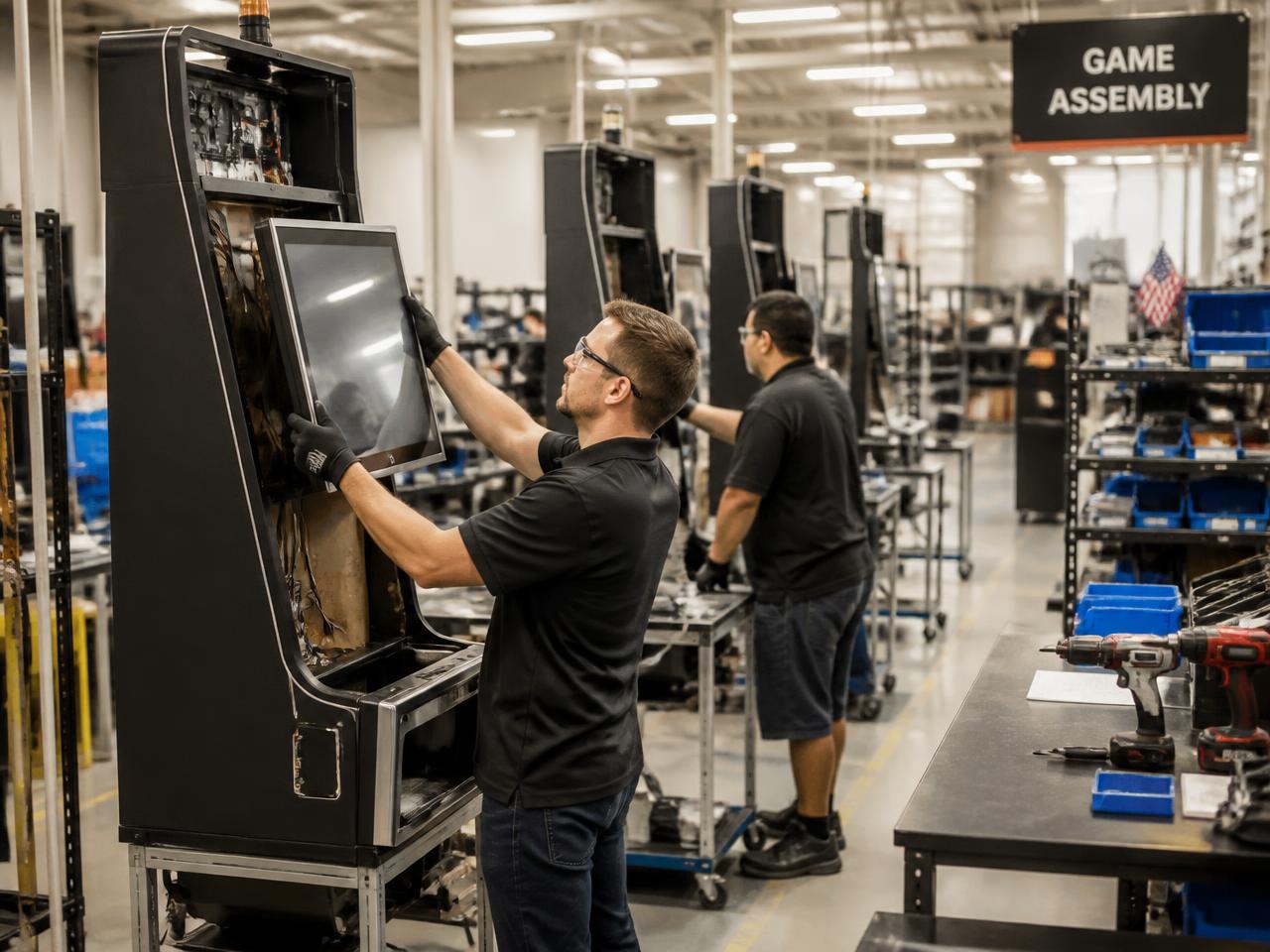
Automation has entered at the edges: CNC routing of table frames, digital printing of layouts, and laser-cut chip tray inserts. The assembly, levelling and finishing remain manual and are likely to stay that way.
The economics are unusual for the industry. A well-made table has a service life measured in decades, so manufacturers compete on refurbishment programmes as much as on new units.