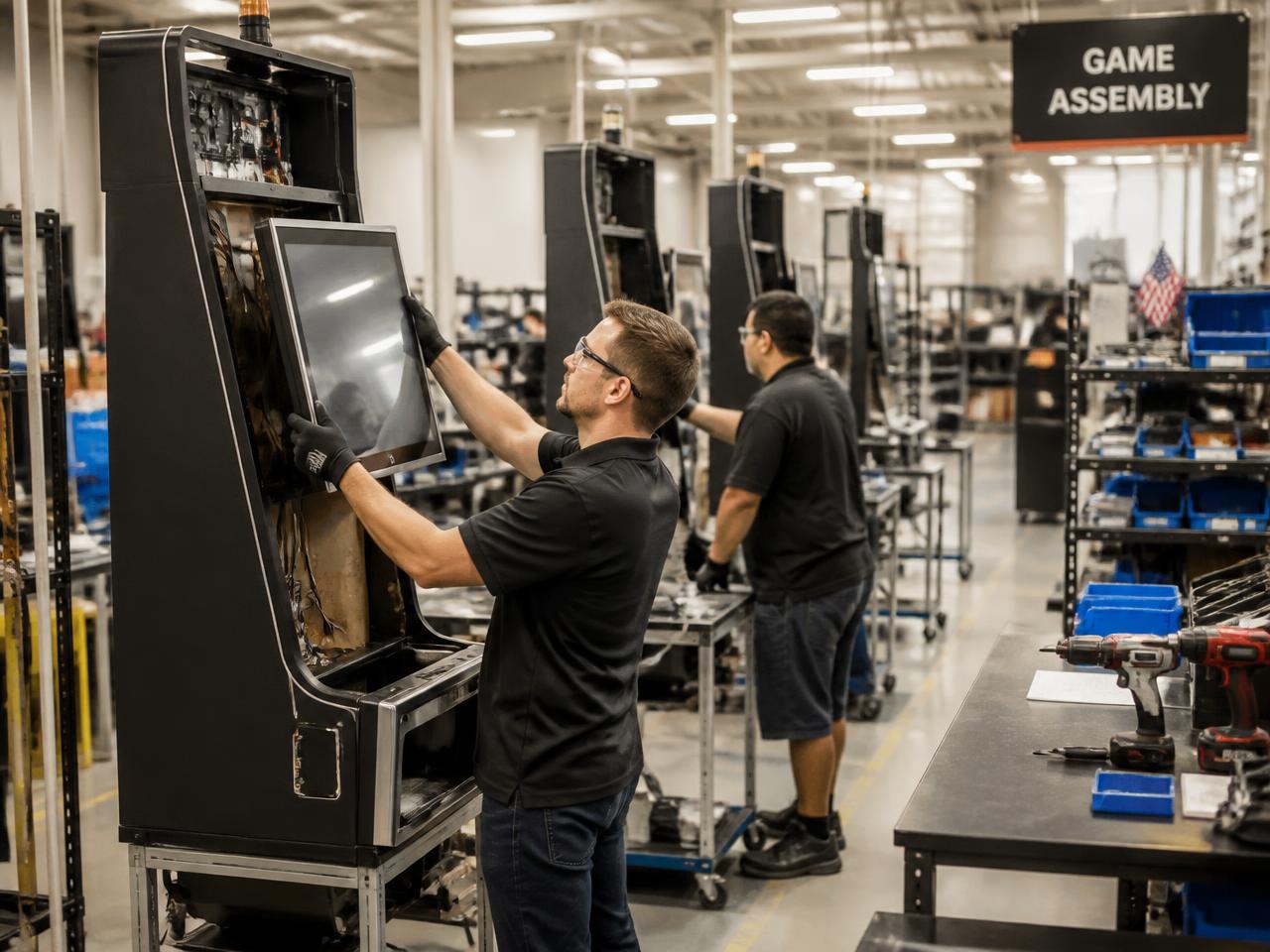
Replacing a substantial share of a venue's gaming equipment while trading continuously is a logistics exercise before it is a technology one. Deliveries, lift access, temporary hoarding, dust control and re-commissioning all have to fit inside overnight windows.
The venues that do this well plan in tranches of a few dozen positions, with a fixed nightly sequence and a rehearsed fallback if commissioning fails.
Nobody notices a good replacement programme. That is the entire specification.
Sequencing
Sequencing usually follows the services rather than the sales case: areas with adequate power and data capacity are done first, and areas requiring electrical work are grouped into a single longer closure.
Signage, seating and carpet are coordinated with the equipment programme, since a new cabinet against tired carpet reads worse than no change at all.

Disposal and reuse
Retired equipment increasingly goes to refurbishment or secondary markets rather than to disposal, driven by both cost recovery and reporting obligations.
Documentation of secure data destruction on retired machines and terminals has become a compliance step in its own right.