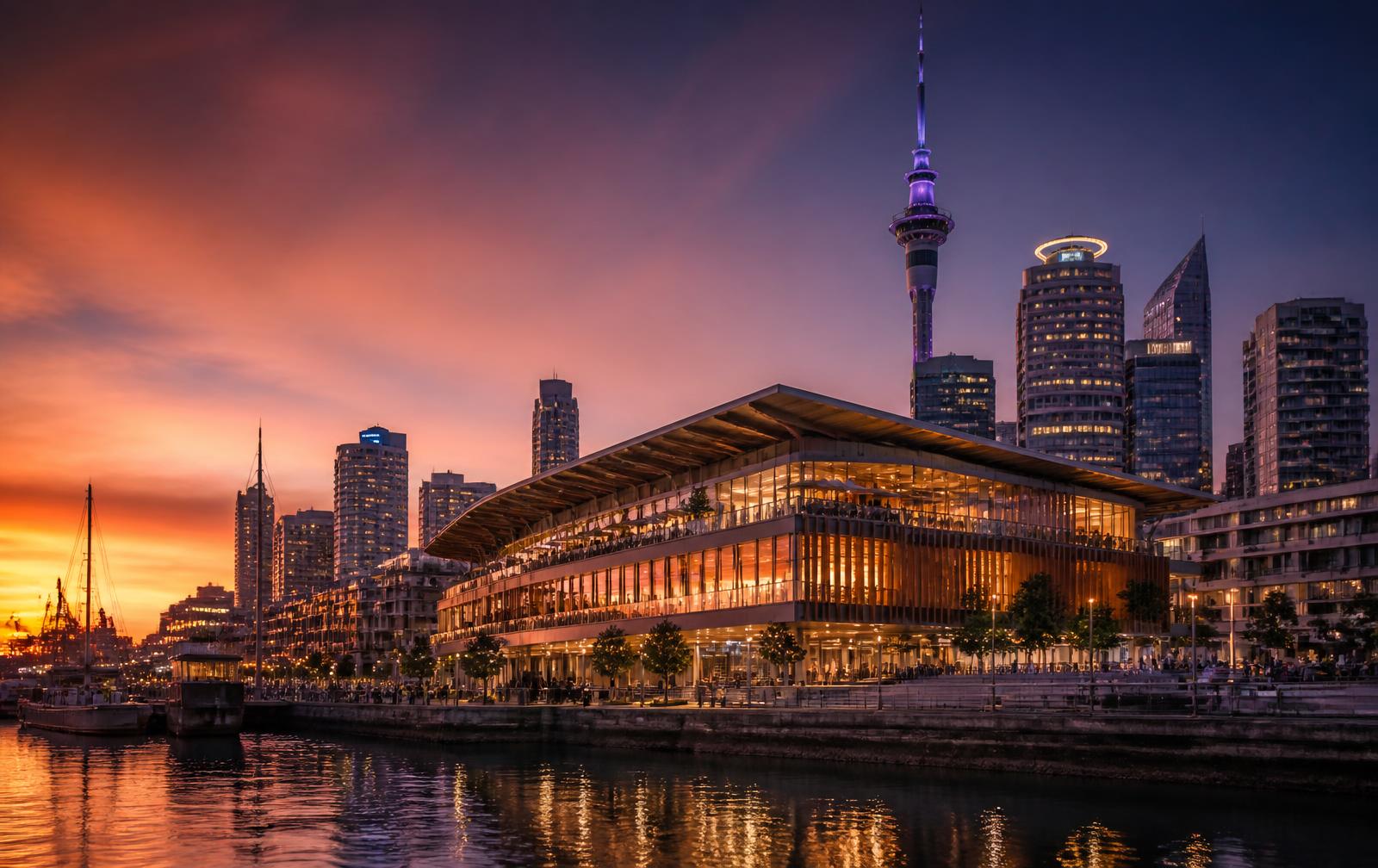
Queenstown's hospitality economy makes it an unusual test case. Visitor numbers dwarf the resident population, seasonality is extreme, and community tolerance for gaming expansion is limited and closely watched.
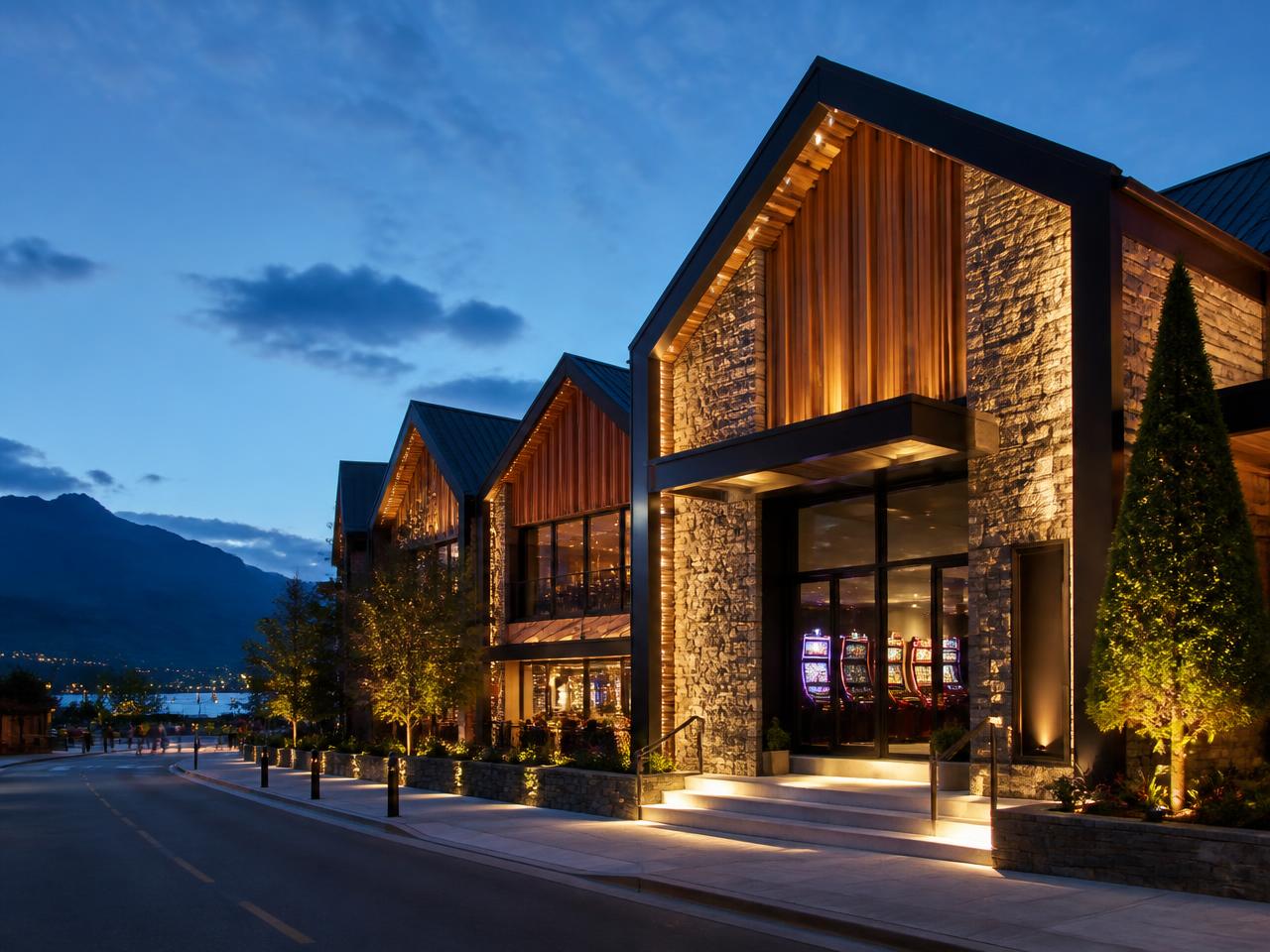
The response has been small-format: compact gaming rooms embedded in wider food, beverage and entertainment offers, with design emphasis on discretion and integration rather than presence.
In a town of forty thousand residents and several million annual visitors, the venue brief is written twice.
Design consequences
Small floors change the equipment specification. Machine mix matters more than machine count, service access has to work without back-of-house corridors, and acoustic separation from adjacent dining is critical.
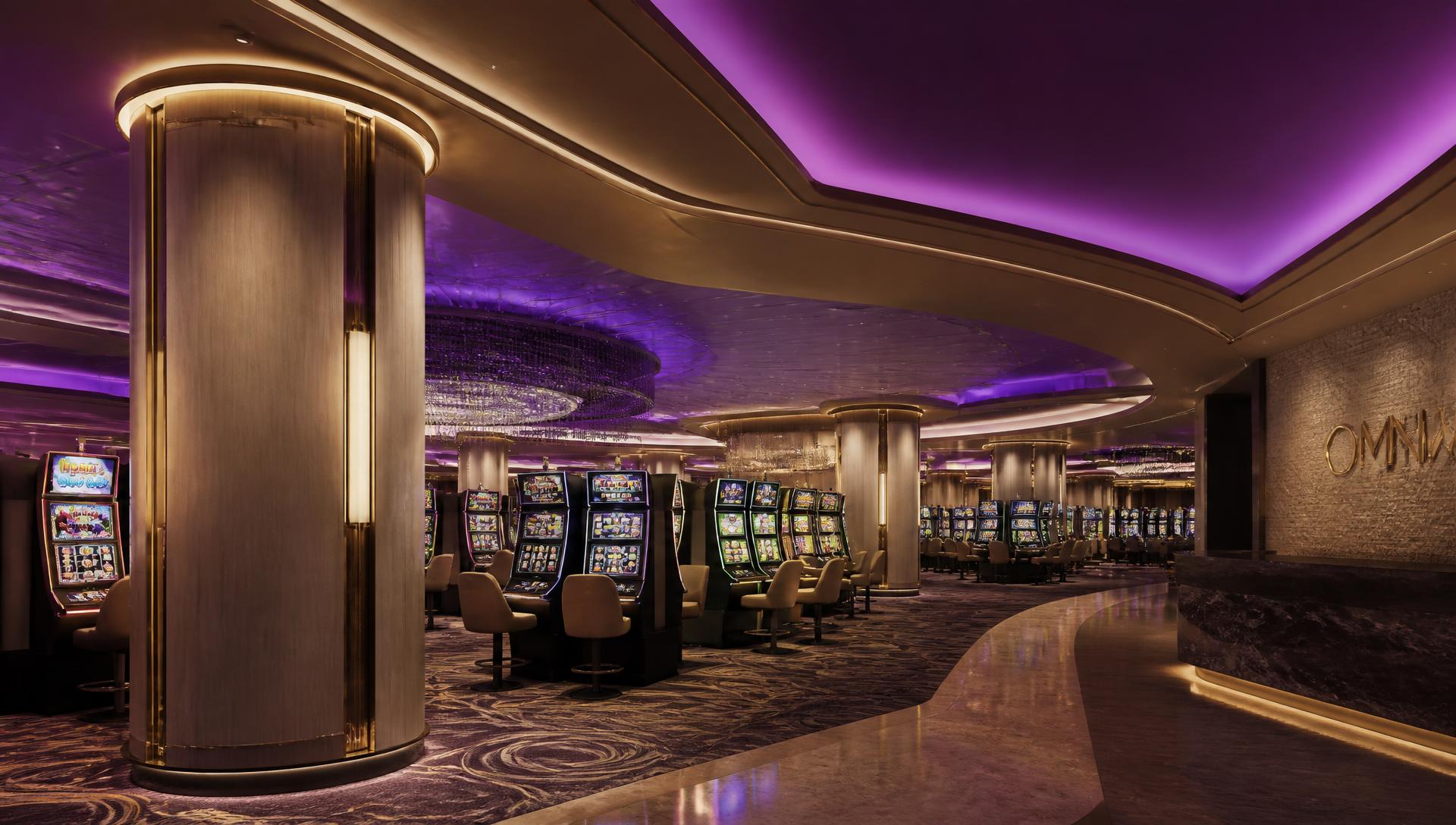
Materials lean regional - schist, timber, wool textiles - with gold and plum accents used sparingly to signal the premium tier.
Community and season
Operators describe an obligation to demonstrate local benefit: employment, supplier spend and support for community facilities, reported in a form that residents can read.
Seasonality shapes staffing and works programmes, with major maintenance pushed to the narrow shoulder windows between winter and summer peaks.